Ever pulled up to the terminal and spotted a sign warning about airport drop-off charges? That sinking feeling is familiar to a lot of us.
The fees are real, and they keep climbing. In 2026, the biggest UK hubs charge roughly £6 to £10 for a standard drop-off, and the cost jumps fast if you stay too long.
We help groups and families with airport transfers every week, so we know how confusing this gets. Here we break down who pays, who is exempt, and how to avoid paying at all, from Manchester and Bristol to London’s busiest airports.
Grab a cuppa, and we’ll go through it together.
What Are Airport Drop-Off Charges?
Airport drop-off charges are fees for short-term vehicle access to terminal forecourts or dedicated drop-off zones. You pay them when you use the spaces near departures to unload passengers and luggage.
Airports like Manchester, London City and Heathrow use these fees to manage traffic and raise revenue. Prices vary a lot, so it helps to see a few real examples.
Manchester and London City tariffs
| Airport | Time Allowed | Charge |
|---|---|---|
| Manchester (Terminal 2) | 5 minutes | £5.50 |
| Manchester (Terminal 2) | 10 minutes | £6.50 |
| Manchester (Terminal 2) | Up to 30 minutes | £25 |
| London City | Up to 10 minutes | £8.50 |
| London City | 10 to 20 minutes | £10.50 |
| London City | 20 to 40 minutes | £13.00 |
| London City | 1 to 2 hours | £60.00 |
How payment and penalties work
You must pay online or by phone. Cash and cheques won’t work.
Overstaying hurts. At Manchester Airport, an overstay charge of £60 applies if you go beyond the 15-minute limit in the T2 Express Pick Up zone.
Miss payment by midnight the following day, and a Parking Charge Notice of £100 follows at Manchester. Paying within 14 days reduces it to £60.
Knowing the rates helps you plan your airport transfers and Essex Transfers with fewer surprises.
Why Have Airports Introduced Drop-Off Fees?
Congestion and rising costs
Airports from London Gatwick to Edinburgh Airport face constant pressure to keep traffic moving. Passenger numbers keep climbing, and the forecourts struggle with the volume.
Drop-off charges began as a practical fix. They discourage people from lingering in the departure zones, which keeps cars flowing.
Revenue plays a part too. Gatwick raised its fee from £7 to £10 on 6 January 2026, a 43% rise. According to Gatwick’s announcement, as reported by Express & Star and Time Out London, the airport blamed a jump in business rates.
The Department for Transport has recognised congestion as a serious issue at major transport hubs. Birmingham, Cardiff and Glasgow have all brought in charges to tackle the same problem.
How airports enforce the rules
Airports now use several tools to make sure drivers follow the rules:
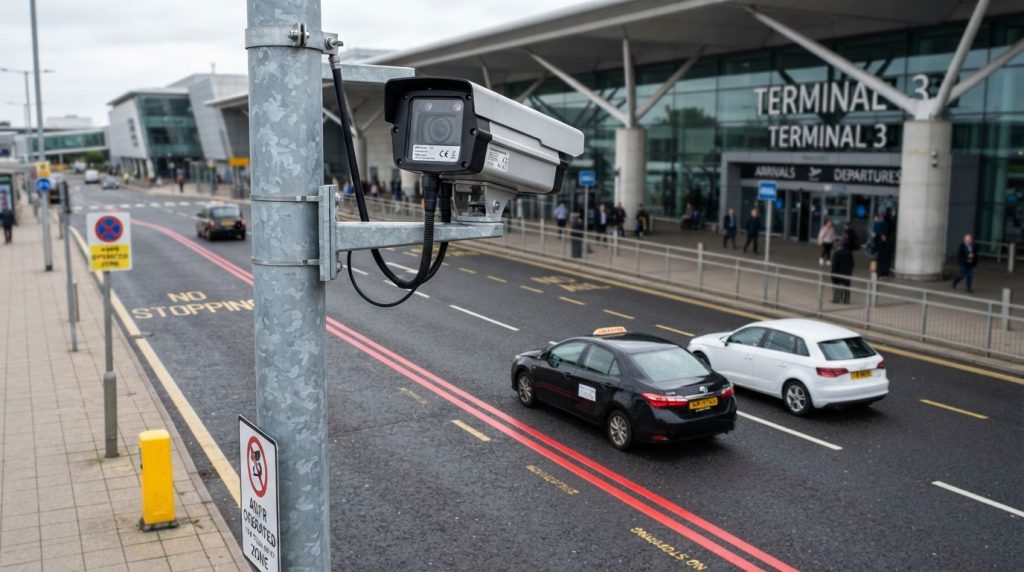
- Red Routes with double red lines mark the no-stopping zones.
- Automatic number plate recognition (ANPR) cameras monitor the areas constantly.
- Enforcement teams patrol airport grounds to catch non-compliance.
- Penalty charge notices follow if you ignore the rules, and the amount differs by airport.
The system works because it creates real consequences. Heathrow and Manchester figures appear later in this guide.
Who feels the squeeze
Congestion at terminals affects everyone, from families rushing for flights to coaches hired for airport transfers. Minibus hire for airport transfers and coach hire services both need reliable access to drop-off points.
Free drop-off zones with shuttle services give people a way to avoid charges. London Stansted, London Luton and London Southend all offer options like these. They take pressure off the main forecourts, which helps all travellers.
The Aviation Environment Federation supports congestion reduction that also improves air quality. Services like Essex Transfers help travellers handle the costs by offering parking solutions.
The charges reflect a simple reality. Airport forecourts are premium spaces, not long-term parking areas.
Airport Drop-Off Charges Across Major UK Airports
Let’s look at what you’ll actually pay at the two biggest names, Heathrow and Gatwick.
Heathrow Airport
Heathrow runs one of the UK’s strictest drop-off systems, so it pays to know the details before you arrive. According to Heathrow’s own terminal drop-off charge pages and its payment operator APCOA’s help centre, the fee rose from £6 to £7 per visit on 1 January 2026. It applies at all terminals.
| Drop-Off Feature | Details | Why It Matters |
|---|---|---|
| Fee per visit | £7 at all terminals | The charge applies every time you use the forecourt. |
| Time limit | Strict 10-minute maximum stay | Families unloading luggage can run out of time quickly. |
| Penalty Charge Notice | £80, reduced to £40 if paid within 14 days | Overstaying, or not paying by 11:59pm the next day, triggers it. |
| Payment method | Online or by phone, cashless only | No coins or notes are accepted at any point. |
| Enforcement | ANPR cameras across the forecourts | The system records your entry and exit times automatically. |
| Vehicle height | Restrictions may apply | Larger vehicles can face barriers, much like London City’s 2.5-metre limit. |
| Free alternatives | Free parking areas away from the terminals | These sit beyond the main forecourts and cost nothing. |
The 10-minute cap is the biggest trap. Heathrow’s ANPR system logs your entry and exit, then gives you until 11:59pm the next day to pay. Pay after that, or overstay, and the system flags a Parking Charge Notice automatically.
Many travellers don’t realise cameras run the whole process. You can’t dodge the charge with cash, because the airport doesn’t take it. If payment doesn’t arrive, the enforcement team links to the DVLA database and tracks down the registered keeper.
Many families also miss the free drop-off zones entirely. They sit further out, but they cost nothing. That makes them ideal when you have time to spare.
Passengers with mobility needs should look at these options beforehand, as they often have accessible facilities. Blue Badge holders have a separate route to a discount, which we cover in the next section.
Height restrictions catch many van users and drivers of larger vehicles. Check your vehicle’s measurements before you travel. A quick check saves frustration and potential damage.
Gatwick Airport
Gatwick works quite differently from Heathrow, though the enforcement methods look similar. According to Gatwick’s tariff as reported by Express & Star and FTN News, you pay £10 for the first 10 minutes, plus £1 for every extra minute. The stay is capped at 30 minutes, with a £30 daily cap.
| Drop-Off Feature | Details |
|---|---|
| Tariff | £10 for 10 minutes, then £1 per extra minute |
| Limits | 30-minute maximum stay and a £30 daily cap |
| Monitoring | ANPR cameras track all vehicles entering and leaving drop-off zones |
| Payment | Online or by phone after exiting; no cash accepted |
| Entry and exit | Barrierless system with no physical gates |
| Free alternative | Long Stay car parks with a free shuttle to the terminals |
| Blue Badge holders | Remain exempt |
| Enforcement | Teams patrol the forecourts; unpaid fees lead to Parking Charge Notices |
| Vehicle restrictions | Height and size limits may restrict access to some forecourt areas |
Gatwick relies on technology rather than gates. Your vehicle passes through smoothly, but cameras capture every registration plate. You pay afterwards, which is straightforward if a bit impersonal.
Here are the points that catch people out:
- The airport monitors every minute you spend in the bays, so overstaying costs extra.
- Cash isn’t accepted, so you must settle the bill by phone or online.
- The barrierless entry feels convenient until you forget to pay.
- The free Long Stay option means extra shuttle time, but it costs nothing.
The system works well for most people. It just demands attention to payment deadlines and time limits.
Do Blue Badge Holders Have to Pay Drop-Off Fees?
Blue Badge holders get special treatment at many UK airports, and drop-off charges don’t always apply. The rules differ from one airport to the next, though.
| Airport | What Blue Badge Holders Get | What You Must Do |
|---|---|---|
| Manchester | Free access to forecourt drop-off areas | Show your badge to traffic marshals on arrival. |
| London City | Up to 40 minutes at a reduced fee of £8.50 | Scan the badge barcode at the exit barrier. |
| Heathrow | 100% discount for valid UK or EEA badges, plus exemption from the 10-minute limit | Register online up to three months before travel, or by 11:59pm the day after drop-off. |
| Gatwick | Remains exempt | Check the airport’s current process before you travel. |
The Heathrow discount is not automatic. According to Heathrow’s terminal drop-off charge terms and conditions, miss the registration window and you pay.
The Manchester exemption only works if staff see your badge on arrival, so don’t skip that step. At London City, family and friends dropping off a Blue Badge holder can use the same badge for the parking benefit.
If a Blue Badge holder needs help leaving London City, they should press the help button at the exit.
We recommend booking assistance in advance through your airline if you need extra support during your airport transfers. Staff will announce your arrival at the Assistance point, which makes the whole experience smoother.
Policies shift between locations, so check with your terminal before you travel. Whether you use coach hire for airport transfers or drive yourself, a Blue Badge can open the door to better rates and easier access.
Tips to Avoid Airport Drop-Off Charges
You can sidestep most drop-off fees by using free zones, or by switching to public transport and ride-sharing. A bit of planning beats paying extra every time.
Use free drop-off zones
Most major UK airports offer free drop-off areas away from the main terminal forecourts. Manchester Airport’s JetParks 1 free drop-off area has a 24/7 shuttle bus that takes just six minutes to reach the terminal.
London City Airport has a Waiting Zone for passenger drop-off and pick-up at no cost. Frequent shuttle buses run between the Car Rental Centre and the terminal. Signs clearly mark these free zones.
Plan for extra travel time, since the shuttle adds a few minutes. The saving can be well worth it, though.
Fees keep creeping up. Stansted raised its drop-off fee from £7 to £10 on 19 March 2026, with a £28 tier for stays of 15 to 30 minutes. According to 2026 comparison guides from Britain Car Parks and Park4Travels, Manchester sits at about £6. That puts the 2026 spread at roughly £6 to £10 per visit at the big hubs.
Here is how the time and cost compare for a family of four with luggage at Manchester:
| Option | Time Breakdown | Total Time | Cost |
|---|---|---|---|
| Paid forecourt drop-off | 8 minutes driving, 5 minutes unloading | 13 minutes | £6.50 |
| Free drop-off shuttle | 6 minutes to park, 6 minutes on the shuttle, 4 minutes unloading | 16 minutes | Free |
The free option saves £6.50 and adds only 3 minutes. That makes it a smart choice if you aren’t racing the clock.
Start by finding these free spaces before you arrive. Manchester’s free drop-off shuttle runs one way, from the car park to the terminal, which suits departing passengers. London City’s frequent service means a short wait.
Pair a free zone with public transport or ride-sharing, and the journey stays cheap and calm. That also beats the paid forecourt rates at airports like Heathrow and Gatwick.
Opt for public transportation or ride-sharing services
Public transport and ride-sharing let you skip airport drop-off charges entirely. Manchester, London City, Leeds Bradford and East Midlands all sit on train, tram, bus or coach routes.
Check the airport website for public transport links and ride-sharing pick-up zones. Car parks at Tesco or Sainsbury’s sometimes offer cheaper alternatives too. Ride-sharing options have designated drop-off areas that keep passengers moving.
During busy periods, trains and buses often beat the car queues. You save time and money at once.
Passengers who need accessibility help can arrange assistance through their airline or the airport. Some airports also offer discounts and promotions on public transport for passengers and staff.
Leaving the car at home cuts traffic around the terminals and shrinks your environmental impact. It also keeps you clear of penalty notices for overstaying in drop-off zones.
Final Thoughts on Airport Drop-Off Charges
Airport drop-off charges now run from about £6 to £10 at the biggest hubs, and penalties are steep if you overstay or pay late. Blue Badge holders may qualify for free or reduced access, but the rules differ by airport.
Free drop-off zones and public transport remain the easiest ways to save. A little planning before you set off keeps your airport transfers smooth and your money in your pocket.
FAQs
1. How much do UK airport drop-off charges cost?
We’ve seen charges vary widely across the UK, and they keep rising. Heathrow charges £5 for up to 10 minutes at terminal forecourts as of 2026, whilst Manchester Airport charges £6 for the same window. Liverpool, Newcastle, Bournemouth and Belfast International Airport all have their own fees, so we always recommend checking each airport’s website before you set off.
2. Do groups pay more than solo travellers?
No, the charge covers the vehicle, not the number of passengers inside. A full minibus from Essex Transfers pays exactly the same as a single person in a taxi.
3. Can I avoid the fee altogether?
Yes, with a bit of planning. Most major airports offer a free long-stay drop-off zone that’s a short walk or shuttle ride from the terminal, and smaller airports like Humberside and Cornwall Newquay often have more relaxed rules.
4. Is kiss and fly cheaper than airport parking?
For a quick goodbye, yes, it usually works out cheaper. If you’re making two trips or need to park for longer, booking a space through Essex Transfers often costs less and saves the stress of rushing.
5. Why do airports charge at all?
Airports say the revenue funds road maintenance, security and traffic management, a point Karen Dee of the Airport Operators Association has made publicly. Drivers’ groups, including the RAC where Rod Dennis speaks on motoring policy, argue the fees disproportionately affect families and feel more like a revenue grab than a genuine cost recovery measure.